
Process Design Hacks for Scaling Your Inbound Marketing Team
In my previous post, I shared the challenges that drove me to the necessity of designing processes for my team.

If you’re a marketing manager overwhelmed by managing your team, tracking daily progress, handling feedback and approvals, this post is definitely for you.
In this post, I’ll walk you through how I approach process design to meet our goals effectively.
1. Design Team Structure & Goals
Our marketing team is tasked with managing 2 main growth engines: Inbound and Events. The ultimate goal of this system is to generate X qualified leads per month across 10 products (our marketing courses).
To achieve this, I need to ensure that we have the right people in the right roles and that everyone has clear, achievable goals. This involves structuring the team thoughtfully and defining objectives for each group.
I’ve divided the team into two sub-teams, each with a distinct purpose:
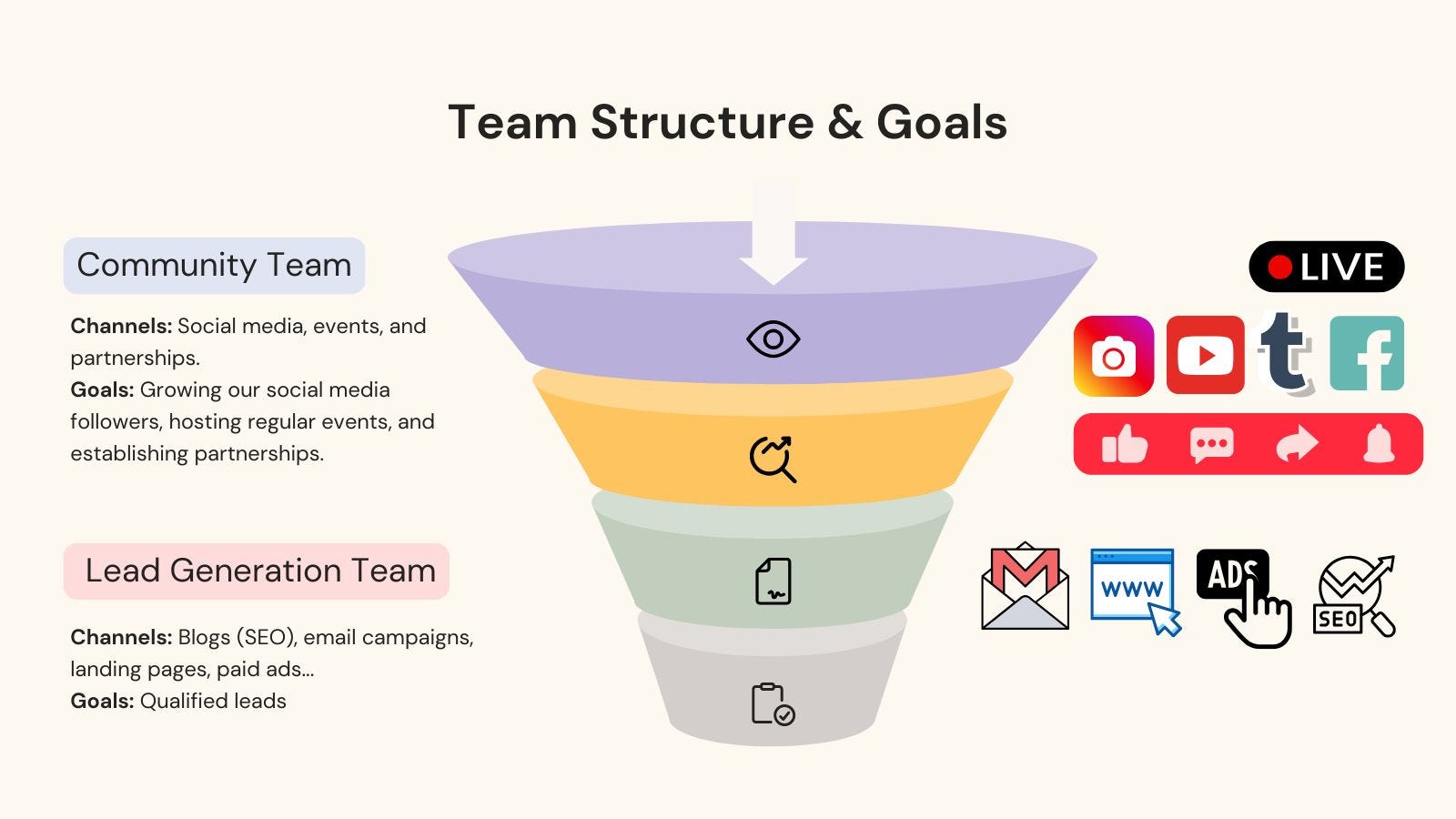
1, Community Building Team: This team focuses on creating and nurturing communities tailored to different target audiences. Their work spans:
Channels: Social media, events, and partnerships.
Goals: Growing our social media followers, hosting regular events, and establishing partnerships.
2, Lead Generation Team: This team’s primary role is to attract and convert leads by developing inbound content, building a funnel for each product from awareness to conversion, helping our audience recognize their challenges while positioning our solutions as the answer.
Channels: Blogs (SEO), email campaigns, landing pages, and paid ads.
Goals: Qualified leads.
With this structure and set of objectives, my next step is to design processes that empower our team to achieve their goals.
(You can revisit my previous blog post to gain deeper insights into why having a clear team structure and well-defined goals is essential before designing processes.)

2. Design Key Processes
Setting Content Quality Standards
Every effective process starts with clear standards and thoughtful design. A process cannot be successful without a clear understanding of the desired outcome. That’s why I need to start by helping you understand our standards.
Eighty percent of our workload revolves around content marketing. We leverage content marketing for various purposes: Attracting traffic, nurturing leads, promoting events, encouraging product purchases, and more. To ensure everyone is aligned and maintains a consistent standard of quality, we’ve developed a structured content marketing process. This process is built on six key steps: Research, Ideation, Creation, Distribution, Conversion to Lead, and Measurement.
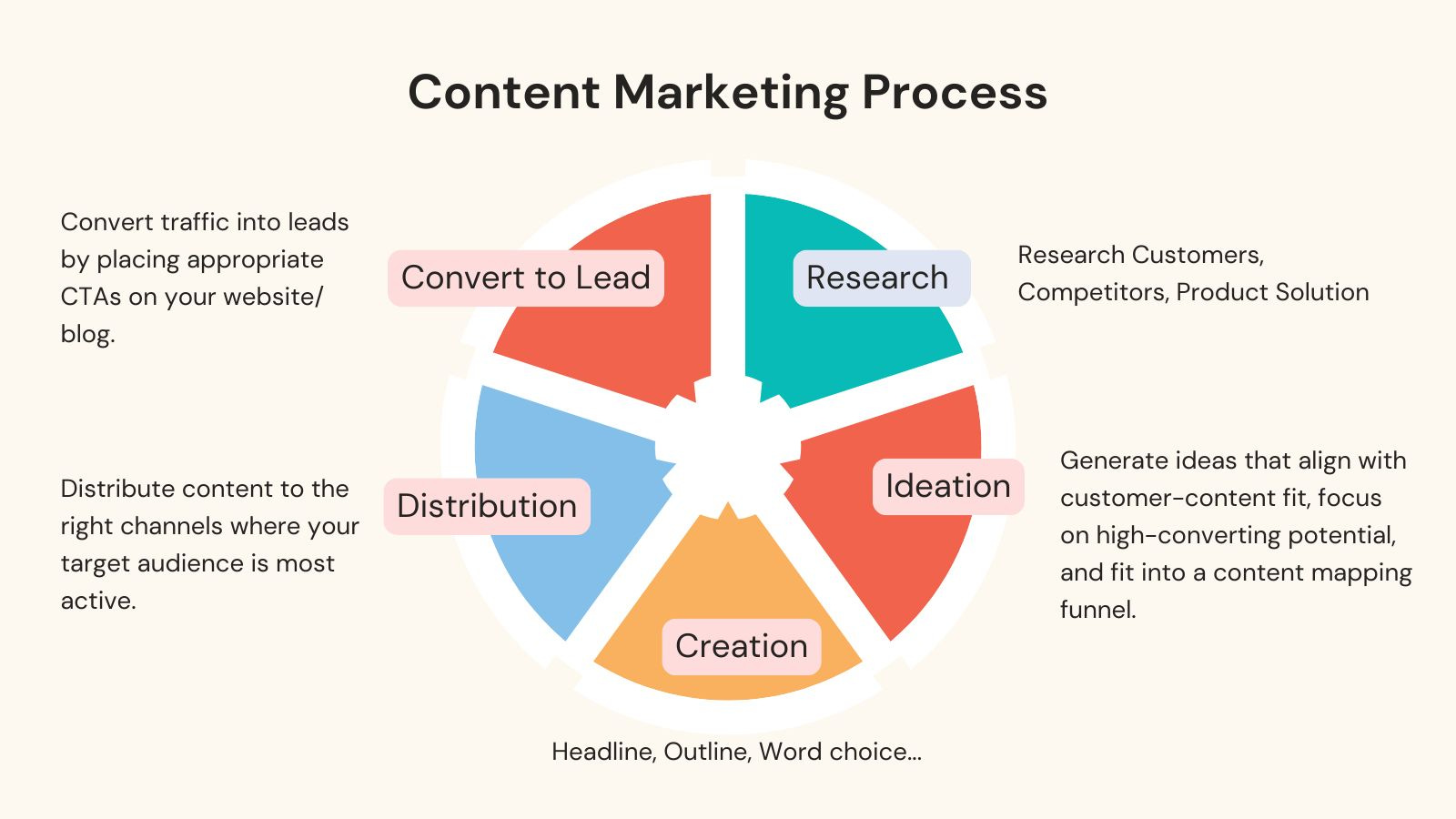
The process is guided by the following principles:
Product Understanding: Writers must thoroughly understand our product solutions and target customers before creating any content.
Customer-content fit: Effective content must align with the customer’s needs, address a specific problem in detail, and be well-researched.
Purpose-driven: Every piece of content should serve a clear purpose - whether it’s to gain followers, raise awareness of a problem, nurturing potential customers or convert traffic into leads.
To equip our team with this mindset and skill set, we’ve implemented a comprehensive training program that covers:
Content Marketing Process: Understanding each stage of content marketing and its role in achieving our goals.
User Research and Customer Targeting: Identifying the ideal customer group for each product—the customers whose problems our product can solve most effectively.
Building a Content Funnel: Designing a pathway to guide audiences from awareness to conversion.
Creating High-Converting Content: Strategies for crafting content that drives measurable results.
Content Distribution: Developing a communication channel system to deliver content to the right audience at the right time and right place.
Placing CTAs: Optimizing call-to-actions on websites and blogs to maximize conversions.
With so many requirements and guidelines, it must be challenging to ensure my team consistently adheres to all of them while running the process. While these standards provide a general mindset, the specifics often vary depending on the platform and content type. For instance, creating content for a long-form blog post is vastly different from crafting a short-form social media post, and the strategies for platforms like Facebook may not align perfectly with those for a blog or other channels.
Each platform has its own nuances, audience behavior, and expectations, which means our team must adapt the overarching principles to fit these unique contexts. The challenge lies in maintaining consistency in quality and purpose while tailoring the execution to suit the platform’s demands.
Digitizing Process Workflows
Initially, my marketing team relied entirely on me to manage daily operations. Every idea had to go through me for approval via chat apps/ email/ docs, where I would leave comments and guide them on how to improve. I review ideas, point out why they didn’t meet standards, and explain how to fix them.
Once the team revised the idea, they’d develop a full draft, which I would then review and comment on again. This involved revising outlines, editing word choice, reorganizing the flow of ideas within the article, and even verifying references. Each piece of content required endless back-and-forth communication.
With 10 products to market across 5+ channels, the workload quickly became overwhelming. I found myself burned out from the constant cycle of checking, providing feedback, and refining content every single day.
The pain finally came to an end when I began digitizing the process using Workflow. This tool allowed me to define clear rules and guidelines, standardize how tasks are executed, and ensure my team consistently adhered to them.
Because of the differences between content types, I had to develop tailored processes for each type of content. Some of our key processes includes:
Social Media content creation process
Blog content creation process
Paid Ads content creation process
Video Production process
Graphic design process
For each process, I define the key stages, the tasks to be completed at each stage (to-dos), the person responsible for each stage (stage workers), the assignment method between stages, and the key outcomes for each stage (custom fields). It's a bit hard to imagine so I created an interactive demo for you.

The table below provides a simple template to help you start designing your process:
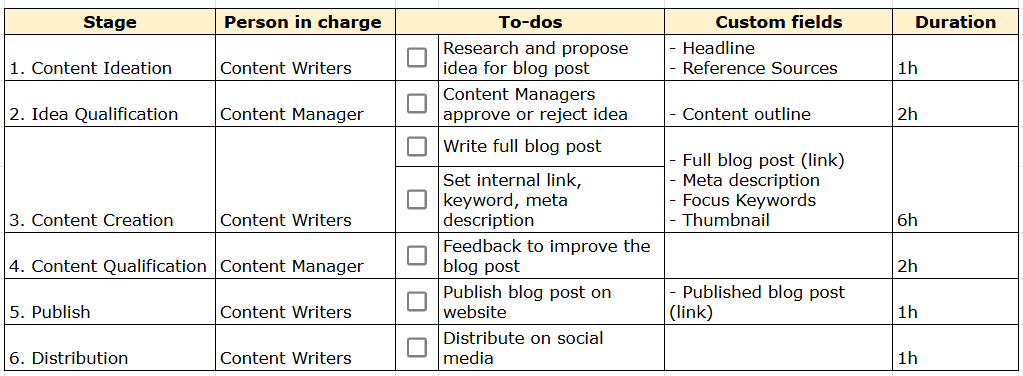
Once the process is designed, each blog post will follow your structured workflow, ensuring consistent content quality. The video below provides a clear and vivid demonstration of how Rework works.
Standardizing processes isn’t just about creating structure, it’s about gaining clarity and control over your business operations. By designing and implementing clear workflows, you create a foundation that allows you to monitor performance, identify areas for improvement, and drive consistent progress.
I hope my experiences spark new ideas and inspire you to take the next step in transforming your business. I’d love to hear your thoughts, insights, or any stories about your business journey - feel free to share them in the comments below!