
Building a Self-Leading Business: Designing Employee Motivation Systems
As a founder, one of the biggest lessons I’ve learned is that building a self-leading business doesn’t just rely on systems and workflows, it relies on people. Keeping employees motivated is at the core of this, and it’s something I’ve thought about deeply as we scaled. I’ve realized that understanding what motivates employees is the foundation for creating an environment where they can thrive and contribute meaningfully.
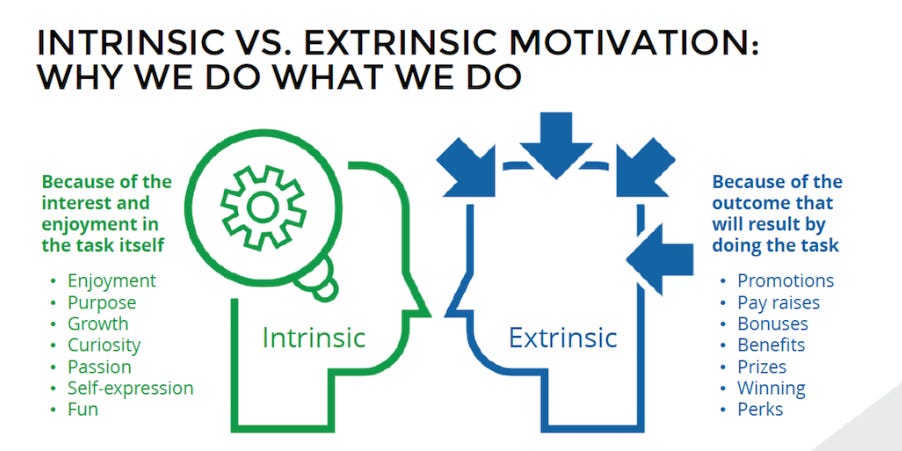
Employees are driven by two key types of motivation:
Intrinsic Motivation
This is the internal drive that comes from within. It’s about doing work that employees love, feeling challenged, satisfying curiosity, and having the opportunity to express themselves. As a leader, I see intrinsic motivation as a powerful force. When employees are intrinsically motivated, they don’t just work—they engage. They innovate, grow, and take ownership of their roles. A big part of my role has been figuring out how to nurture this inner drive in every team member.Extrinsic Motivation
This motivation comes from external rewards - things like compensation, recognition, promotions, or advancement. Extrinsic motivation is important, too, because it creates clear goals and rewards for achievements. I’ve found that a well-designed extrinsic incentive system complements intrinsic motivation, giving employees both the recognition they deserve and a tangible way to measure success.
Creating an Incentive System That Drives Value
An incentive system, in simple terms, is how a business allocates rewards and consequences to encourage purposeful behavior. For me, this has meant designing a system that aligns individual motivations with the organization’s goals. After all, the purpose of any business is to create value - and the incentive system’s purpose is to promote behaviors that support this mission.
Every business faces the same questions:
How do we attract and retain great talent?
How do we keep employees motivated and performing at their best?
For me, these questions have been at the heart of designing our compensation and incentive systems. I realized early on that it’s not enough to simply pay people well or give occasional bonuses. Motivation is a complex interplay of both intrinsic and extrinsic factors. By focusing on creating a culture of growth and recognition, we’ve been able to build a team that’s aligned with our mission and driven to succeed.
So, How Do I Design a Motivating System?
Here’s what has worked for us: I’ve applied a framework inspired by Brian J. Hall's article, "Incentive Strategy within Organizations," published in the Harvard Business Review.
This diagram below illustrates a strategic framework for aligning business strategy, organizational design, and employee’s performance measurement to achieve organizational goals (and adapt to dynamic environments).
The Performance Measurement component directly impacts employee motivation, but its effectiveness relies on proper alignment with the higher-level components of the framework.
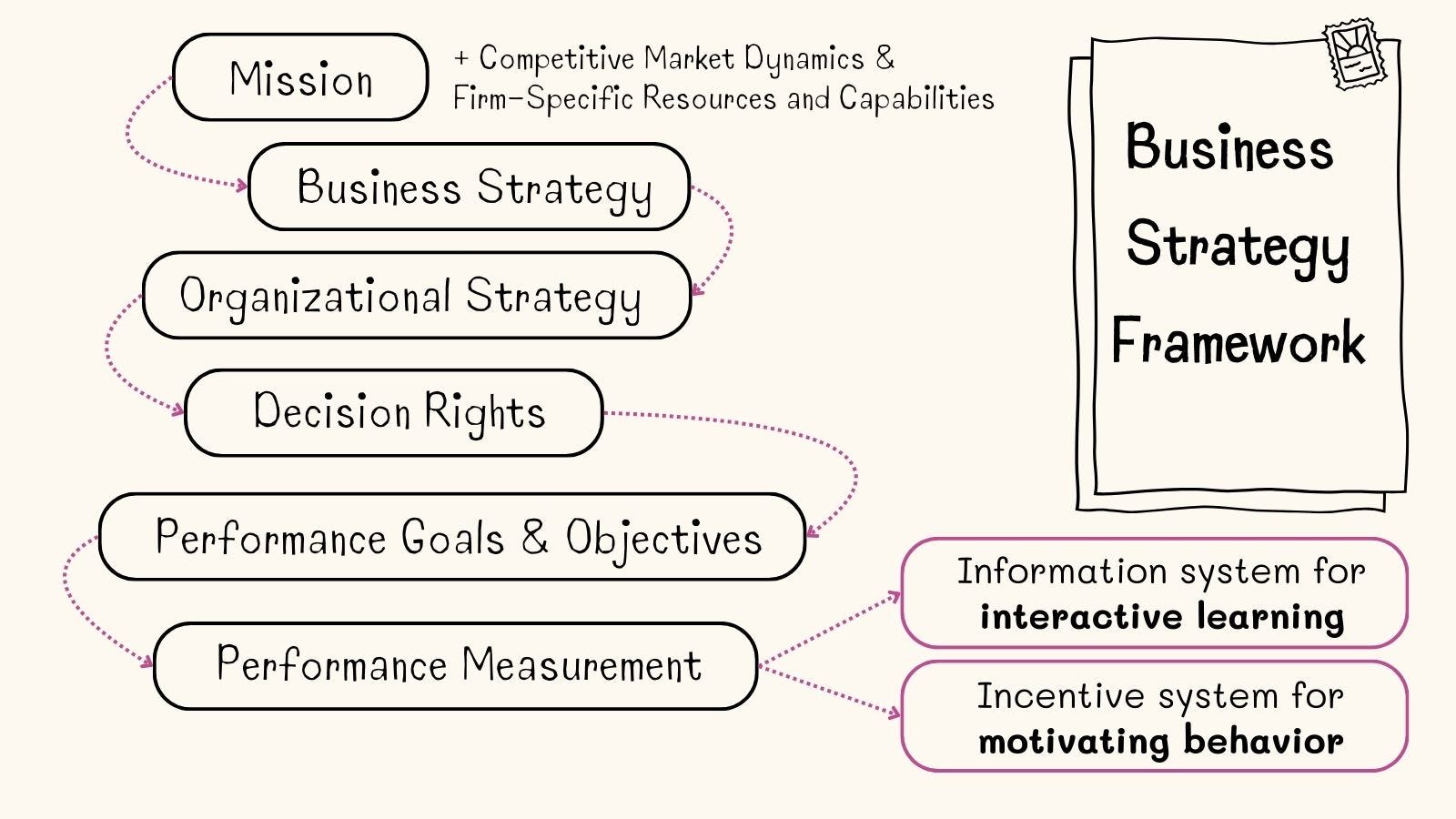
Mission:
The organization defines its purpose and long-term vision, answering why it exists.Business Strategy:
Focuses on where the organization wants to go, setting goals to compete in the market and utilize its strengths effectively.Organizational Strategy:
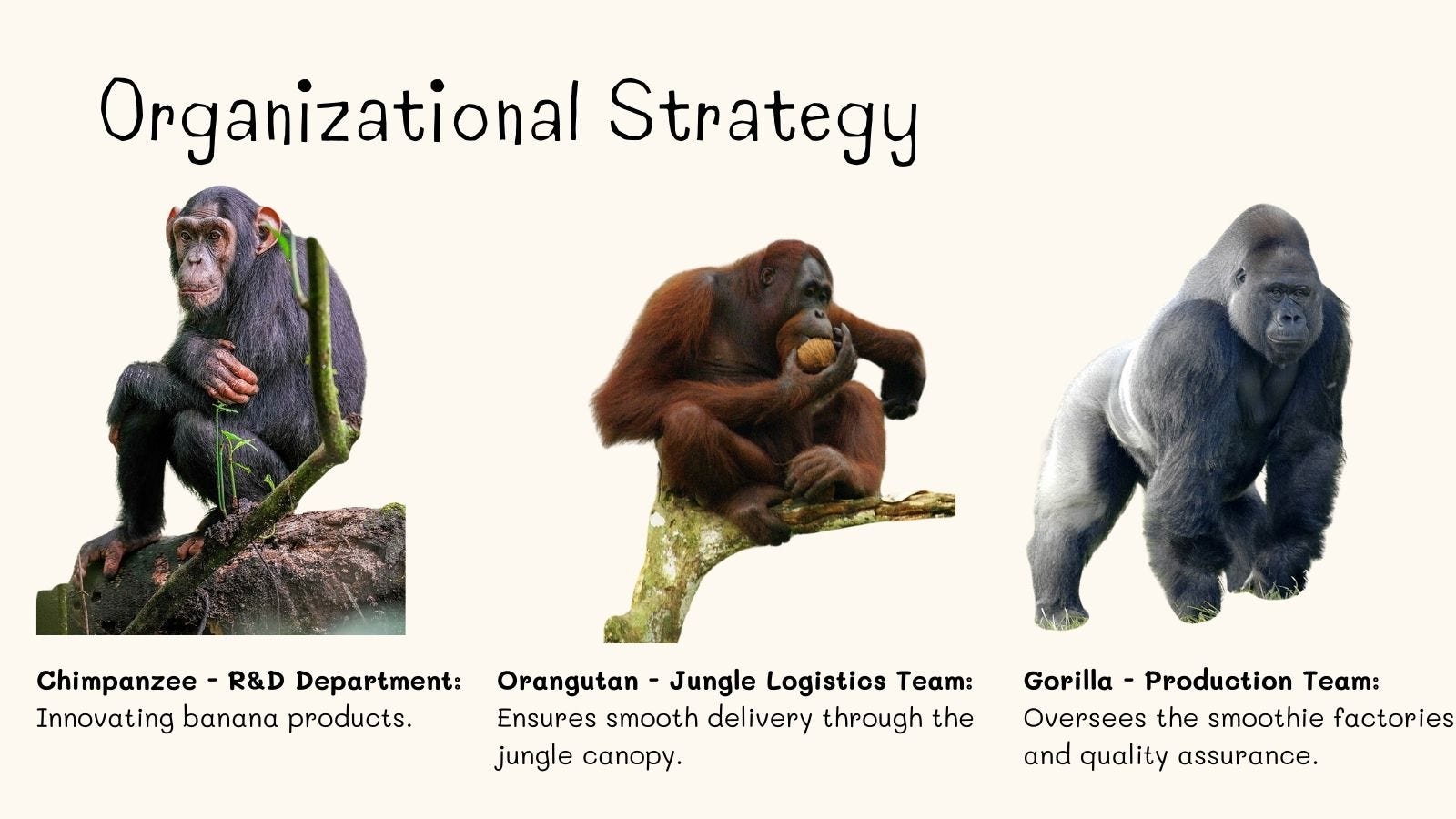
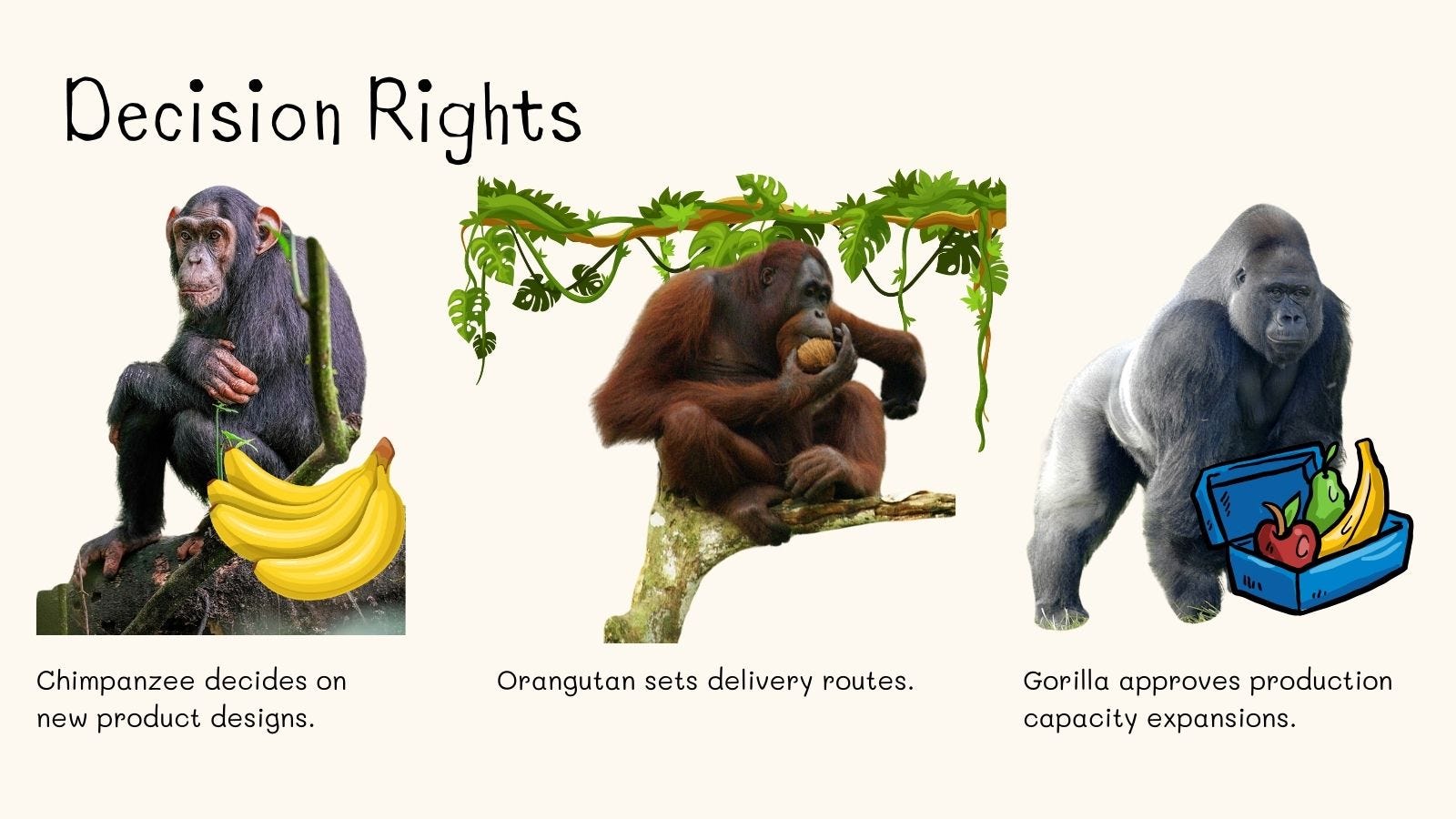
Explains how the organization will get there, involving the design of structures, roles, and responsibilities to execute the business strategy.Structure and Decision Rights:
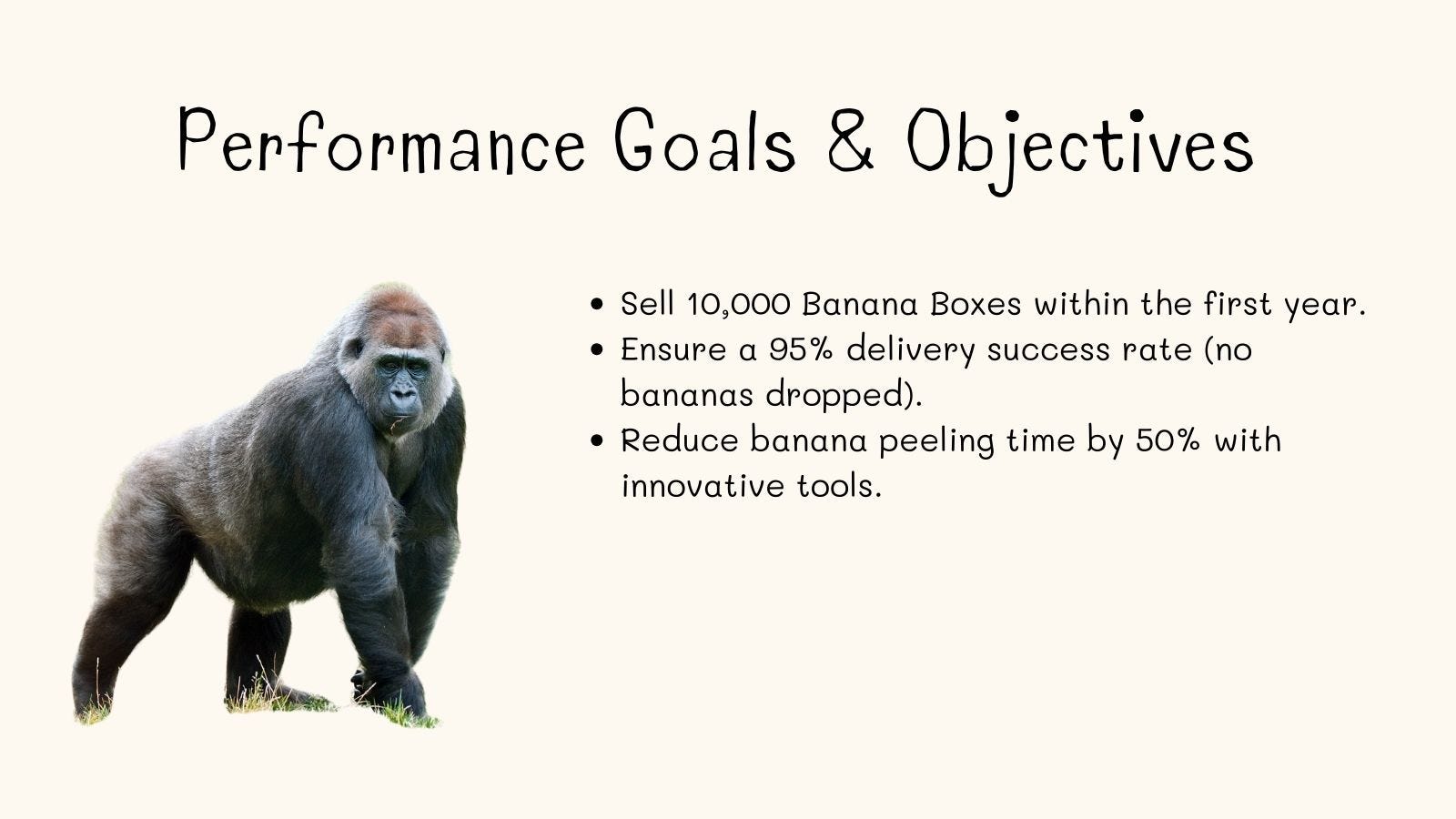
Defines who does what and who has the authority to make decisions, ensuring clarity and accountability.Performance Goals:
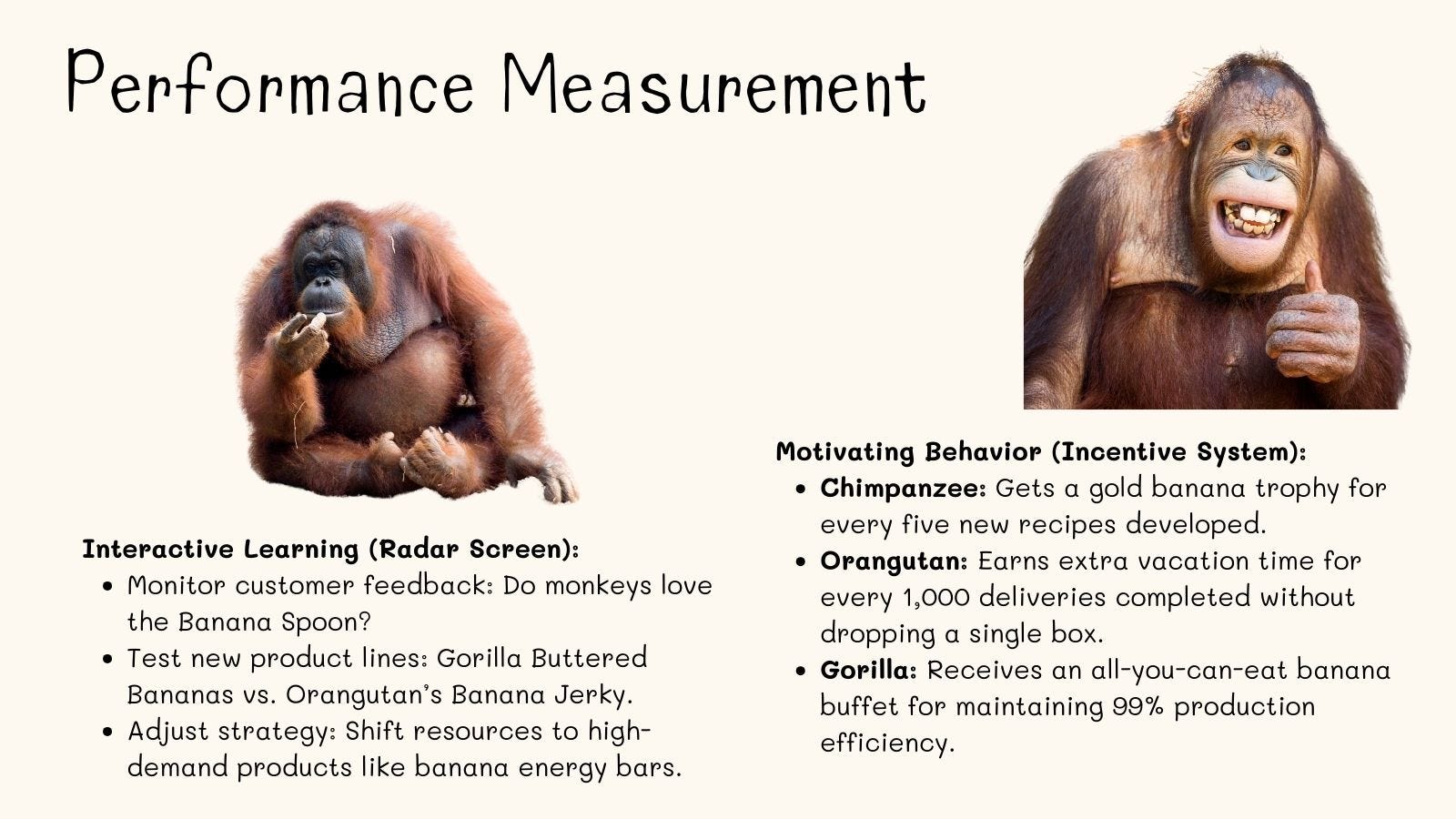
Sets specific, measurable objectives to track success and align efforts with the mission.Performance Measurement:
Interactive Learning: Collects insights to adapt and innovate when needed.
Motivating Behavior: Creates incentives to align individual actions with organizational goals.

Let me share a fun monkey-themed example to make this framework easier to understand! Imagine a monkey-run business aiming to sell bananas throughout the jungle. This company has a few key employees, including a Chimpanzee, an Orangutan, and a Gorilla.
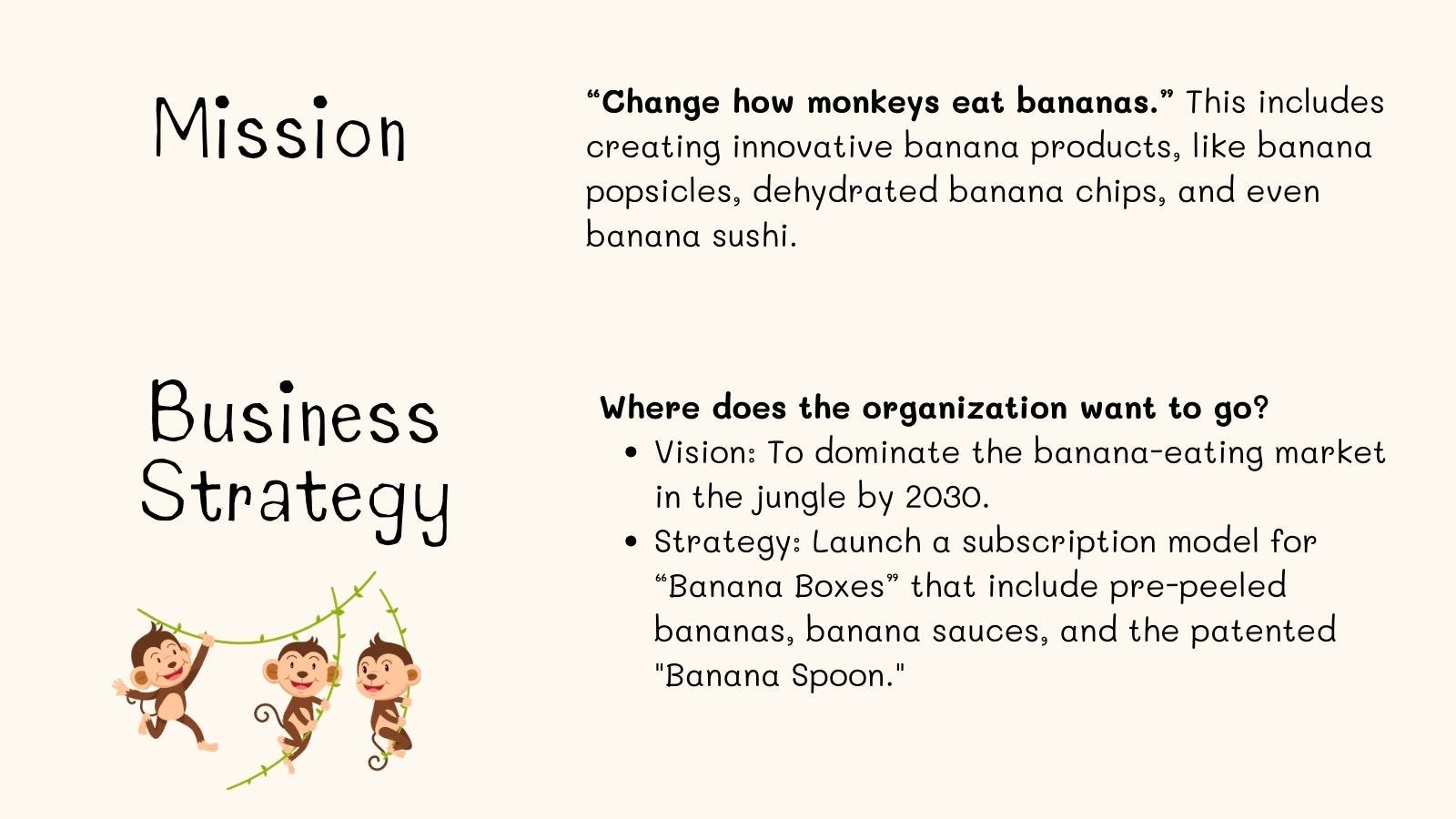
Do you think this strategy will keep our monkeys motivated and performing at their best, swinging toward success in the jungle banana market? 🍌🐒
Motivating your team isn’t just about keeping them happy, it’s about empowering them to take ownership and lead within their roles. For me, creating a balanced system of intrinsic and extrinsic motivators has been a cornerstone of building a self-leading business. By aligning the team’s goals with the company’s mission and values, designing a performance measurement system that provides a clear path to achieving these goals, rewarding employees through an incentive system, and supporting their growth with an information & learning system, we’ve created an environment where everyone is motivated to succeed, not because they have to, but because they want to.
Motivating employees is a journey, and I’m still learning. But one thing is certain: when your team feels valued and inspired, the entire business thrives.